Plumbing rewards patience and punishes shortcuts. That hasn’t changed. What has changed is the equipment. The modern plumber walks onto a job with machines that reveal, measure, cut, press, and verify with a precision that would have looked like overkill a decade ago. Today it is the baseline. From small residential leaks to municipal mains, the trade is leaning on a practical class of tools that deliver speed without giving up reliability. The goal remains the same: get water where it should go, keep it away from where it shouldn’t, and document the work so nobody has to guess later.
This is a look at the machines that have earned their place in the truck, with examples from real use, the trade-offs that actually matter, and the pitfalls to avoid. Whether you are an independent Plumber, a project manager at larger plumbing companies, or a facilities lead, the right gear narrows risk and lowers callbacks. The wrong gear gathers dust and makes a fool of you.
Cameras that tell the truth
Video inspection cameras used to be fragile and finicky. Today’s units are compact, reasonably durable, and paired with locators that map lines below ground. I keep two rigs: a 100-foot push camera for residential drains and a 200-foot self-leveling head for commercial runs. The push rods have a sweet spot — https://theleanderplumber-company.com stiff enough to navigate a 3-inch cleanout bend yet flexible enough for 1.5-inch traps. Spend the money on a head with a sonde that broadcasts location and depth. The difference between a two-hour dig and a twenty-minute pothole is a locator with a strong signal and a tech who knows how to read it.
On a school renovation, our crew traced an old cast-iron branch that no one had on record. The camera found a crushed section 37 feet out, four feet deep. Without the locator, the GC would have insisted on trenching half the hallway. Instead, we cut a single square of slab, replaced three feet of pipe, and had bellies and grade verified in the same afternoon. That’s the value: documentation that stands up in a progress meeting.
There are limits. Cameras show you the inside, not the structure. A hairline crack can look benign while the pipe wall is thin and ready to fail. Grease can disguise offsets. Root balls can stop a head cold and the temptation to force it is strong. The replacement cost for a high-end head can be two to three thousand dollars, which is a painful bill if you jam it into a broken clay hub. When in doubt, retract and rethink.
Locators and signal generators: seeing the lines you can’t see
Line locators have matured from noisy guesswork to targeted tracing. A good locator paired with a transmitter can induce a signal on metallic pipe or on a tracer wire paired with nonmetallic pipe. Most plumbers rely on the sonde in a camera head, but standby transmitters are worth carrying, especially for storm lines. We typically get depth readings within a foot under favorable soil, which is close enough for careful hand digging.
Expect interference in urban cores with power, telecom, and rebar everywhere. Dry sandy soil weakens signal. Winter frost can bounce readings. You will learn to validate with more than one sweep and to mark a corridor, not a thin line. The cost of a good locator kit is roughly equivalent to a week of misdirected excavation on a commercial site, which makes the value proposition easy for plumbing companies that tackle projects with unknown undergrounds.
Electronic leak detection: listening and correlating
Slab leaks and concealed copper pinholes have bankrupted many afternoons. Acoustic leak detection has become a quiet hero. Modern units amplify and filter sound from vibrating pipe walls. For municipal mains, correlators measure time differences between two sensors, triangulating the leak spot. For domestic lines, a single sensor and methodical tracing do the job.
We used an acoustic kit on a 1-inch copper line under a ground-floor condo. Water was surfacing twenty feet away from the source thanks to a vapor barrier. Traditional guesswork would have meant breaking two rooms of tile. By sweeping at night, when ambient noise dropped, we narrowed the leak to a two-by-two foot area. The hammer drill ran for fifteen minutes. The resident kept her kitchen intact. That win came from patience, not magic equipment, but the equipment made patience possible.
False positives are real. A shower valve dripping behind tile can sound like a slab leak. A loose hanger can mimic pipe vibration. The best practice is to verify with pressure testing and, if possible, isolate sections. A couple of mechanical gauges cost little and save embarrassment.
Pipe bursting and trenchless rehabilitation
Aging sewer laterals and services force tough choices. Open trench replacement tears up landscaping and hardscape. Trenchless options turn a two-day excavation into a one-day controlled operation. Pipe bursting pulls a new HDPE line through the path of the old while splitting the host pipe. It works well for clay, cast iron, and some PVC, provided you have both an entry and an exit pit and clearances for the bursting head.
A burst we completed on a 60-foot clay lateral ran four hours from pits to pull, plus concrete patching the next day. Total time on site under ten hours, homeowner back in service by dinner. Compare that to two or three days of trenching, concrete removal, and restoration. Not every job fits. Bursting struggles with reinforced concrete and with significant grade changes or heavy sags. If the line runs under a slab with shallow cover and multiple service wyes, your risk goes up. Lateral lining, with resin-saturated felt or fiberglass, is another tool. Lining rebuilds the pipe interior with minimal digging, but it tightens the diameter and relies on a clean, stable host. It also demands meticulous prep. Any debris left behind becomes a permanent speed bump.
The investment for bursting rigs and inversion drums is substantial, which is why smaller shops often partner with trenchless specialists. That partnership protects schedule and reputation. The cheapest bid on trenchless can cost the most if the installer rushes cleaning, mismeasures cure times, or ignores groundwater. Time spent on pre-cleaning with jetters and a second camera pass is never wasted.
High-pressure jetters: cleaning that sets up success
Cable machines still have their place, especially for soft blockages, but a high-pressure water jetter turns problem drains into documented, prepped lines ready for rehab. The range matters. A 4 gpm, 3,000 psi cart handles residential work. Trailer units at 10 to 20 gpm with higher pressures tackle grease-heavy laterals and commercial mains. Nozzle selection does the heavy lifting. Rotating nozzles scour, penetrators break through roots and sludge, and warthog heads cut and polish.
A restaurant call we handle quarterly runs 90 feet of 4-inch line to the main. The first time on site, the cable punched a hole and bought a few weeks. The jetter with a rotating nozzle stripped two decades of grease, confirmed by camera. After that cleaning, we adjusted the service schedule. They went from emergency calls every few months to predictable maintenance twice a year. The owner stopped treating drain backups as a wild card on Friday nights.
Jetters require respect. Misused nozzles can blow water into vents or backflow into fixtures. Old pipes with thin walls can fail under pressure. Cold weather introduces risk of freezing pump heads. Training techs to bring pressure up gradually, evaluate materials, and watch return water saves equipment and drywall alike.
Press tools and expansion systems: speed without the torch
Press tools for copper, stainless, PEX, and even black iron are as common on job sites now as torches used to be. For copper, press fittings create consistent, repeatable joints at speed, especially in tight spaces or on lines that cannot be completely drained. On a hospital project with limited shutdown windows, we swapped a chiller bypass with press joints in an hour because we didn’t need perfect dryness or a fire watch. That kind of flexibility earns trust with facility managers.
PEX expansion and crimp systems dominate residential and light commercial domestic water. Expansion rings, when properly seated, produce strong joints with minimal pressure loss. Crimp systems are simpler for new hands to learn, but consistent tool calibration is key. Press and expansion are not cure-alls. High heat, UV exposure, certain chemicals, and mechanical abuse will shorten the life of PEX. Press fittings introduce flow restrictions where every fraction of an inch counts. In food plants or labs, material compatibility and approvals govern the choice, not convenience.
Cost comparisons shift with job size. On a small repair, press fittings and tool amortization can make the per-joint cost high. On larger runs with many joints, labor savings outweigh fittings cost. Plumbing companies that track productivity per joint, not just material margins, make better decisions here.
Thermal imaging and moisture meters: finding what water hides
Thermal cameras reveal temperature differentials, not moisture directly, but when you know the system layout they become surgical instruments. Hot water lines show warm paths. Radiant loops light up. Evaporative cooling flags wet spots before drywall stains appear. Pair a thermal camera with a pin or pinless moisture meter and you can triangulate a leak without random demolition.
On a multi-story condo where the ceiling below showed faint shadowing, the camera saw a cool seam near a fire collar. The moisture meter confirmed elevated content along a two-foot section. Opening the right spot exposed a weeping CPVC joint, not a drain. A small fix replaced a costly, disruptive fishing expedition. Thermal gear can mislead in high-solar-gain rooms or near HVAC registers. A calm environment and a few minutes for surfaces to stabilize improve accuracy.
Smart controls and data loggers: when timing tells the story
Some of the most effective modern machines are barely visible. Flow sensors, data loggers, and smart valves create a timeline. A vacation home with a hidden leak goes from a big insurance claim to a self-closing valve and a text message. In commercial restrooms, metered flush valves and electronic faucets reduce spikes that can overwhelm old venting or undersized branches.
We installed a mainline flow valve in a second home that suffered two freeze break incidents over five winters. The new valve watched for continuous flow beyond a set threshold and shut down when it detected it. The owner’s next cold snap brought an alert instead of another rebuild. For large buildings, logging pressure at multiple points uncovers water hammer events, undersized PRVs, or erratic pump controls. The investment is minor compared to replacing valves and fixtures damaged by repeated pressure spikes.
CNC-threaded prefabrication and grooved systems: moving labor off site
Mid-sized to large plumbing companies are shifting repetitive work off site. Threading machines with CNC capability, grooving rollers, and pipe stands create repeatable spools of pipe with labels and QA checks. On a hotel buildout, our team prefabricated forty domestic riser segments with grooves and couplings. On site, we needed lifts and torque wrenches more than thread oil and die heads. The system saved two weeks on schedule and cut hot work permits to near zero.
Grooved systems shine in mechanical rooms where changes happen and maintenance access matters. Couplings allow quick rework. The trade-off is space and cost. Grooved fittings and couplings occupy more room than welded or soldered joints, and fittings can cost more per piece. But the labor curve and safety profile often carry the day.
Battery platforms and ergonomics: small gains, long days
The best battery tools these days deliver power close to corded with run times that carry a shift. Bandsaws, threaders, press tools, and reciprocating saws all live on the same platform. Standardizing on one or two platforms for a crew simplifies charging and reduces forgotten chargers and mismatched batteries. What matters more than brand loyalty is cycle time and weight. A press tool that is a pound lighter is trivial at the store and welcome at ceiling height after the hundredth joint.
Ergonomic improvement shows up in handles that don’t twist wrists, in heads that swivel, in strap wrenches that bite without bruising the fingers. The small layout changes keep techs from rushing, which keeps joints clean and aligned. A machine that prevents fatigue prevents leaks.
Vac trucks and wet vacs: controlling the mess
A modest wet vac saves hours on emergencies. A tow-behind vac unit, even a small one, changes the game for pit work and cleanouts. When we excavate in muddy conditions or open a live sewer to perform a burst, keeping the hole dry is the difference between a smooth pull and a stuck head. Vac trucks also shine in soft digging around utilities. When locates are uncertain, vacuum excavation reveals without damage and keeps inspectors calm.
The drawback is logistics. Vac units need disposal planning and dedicated operators. If the unit cannot get close due to site access, you lose the advantage. On residential work, a compact electric wet vac with auto-pump-out is often the practical choice.
Water quality machines: beyond simple filtration
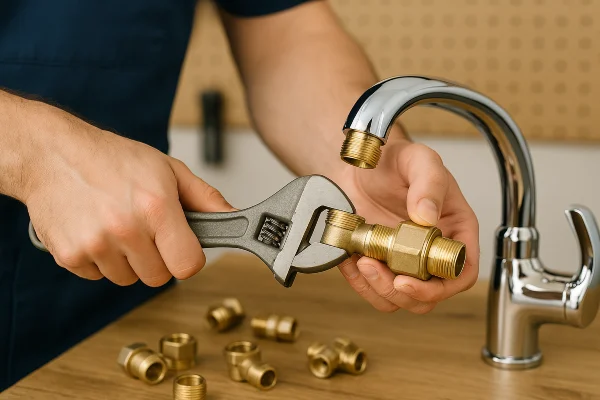
Whole-home conditioners, point-of-use reverse osmosis, and ultraviolet units are not new, but the diagnostic equipment supporting them has improved. On service calls, we carry conductivity meters, hardness strips, and pH tests. When you can quantify the water leaving a new water heater, arguments over warranty fall away. Scale can ruin a heat exchanger in months in hard water regions. A small injection pump tied to a proportional metering valve can protect a system quietly and cheaply. But chemistry introduces responsibility. Underfeeding or overfeeding agents can lead to corrosion or slime.
On a medical office with recurring pinholes in copper, our tests found low pH and high dissolved carbon dioxide from the municipal supply. The fix included raising pH through the building feed and switching to PEX for branches where approvals allowed. Throwing in a sacrificial anode or a gimmick filter would have missed the cause.
Safety and compliance: machines that document as well as do
The modern job is as much about proof as performance. Combustion analyzers on hydronic boilers, backflow test kits that log digital readings, and pressure data that exports to PDF avoid disputes later. Inspectors want numbers, not stories. On a large tenant improvement, we pressure tested a new gas manifold with digital gauges that log over time. When an overnight pressure drop triggered alarms, we could show that ambient temperature changes accounted for it, not leakage. Work continued, and we avoided a delay that would have tossed the schedule.
Similarly, confined space monitors, fall-arrest anchors, and GFCI testers are not glamorous, but they are machines that keep crews earning money. The fastest way to lose profit is a stop-work order or an incident that could have been prevented by the kit sitting on the truck.
Cost, training, and the adoption curve
Every new tool promises to save time and make money. The reality is more nuanced. The machines that pay for themselves share traits. They reduce callbacks, compress schedule in predictably measurable ways, and produce documentation. They also demand training. A jetter used by a novice can flood a kitchen. A press tool in untrained hands creates crimped O-rings and weeping joints. Cameras, locators, and leak detectors return their investment only if the Plumber understands pipe behavior, building anatomy, and the limits of sensors.
For a small shop, the buy-versus-rent question matters. Renting a jetter or a locator for a week can be cheaper than a monthly payment on equipment that sits. Partnering with specialty subs for trenchless work builds capacity without carrying depreciation. As volume grows, shift from renting to owning by tracking usage hours, not gut feelings. For plumbing companies with multiple crews, standardize where you can to simplify support and batteries, but leave room for specialized kits based on service lines.
Edge cases and judgment calls
A few scenarios test the new gear:
- Old knob-and-tube houses with fragile plaster where thermal imaging and moisture meters get confused by airflow. Here, patience and staged openings beat gadgets. Mixed-metal systems that spark galvanic reactions when a small repair introduces a new metal. Pressing in stainless next to old copper can trade one leak for another without dielectric breaks. High-sulfide or high-chloramine municipal water that degrades rubber seals in press fittings faster than expected. Read water quality reports and select compatible seals. Condensate lines built from undersized, poorly sloped tubing where cameras are useless and the fix is a re-route. No machine replaces a correct run and proper trap. Properties with sensitive electronics or recording studios where jetting noise and vibration awaken a different set of problems. Scheduling and communication matter as much as PSI and GPM.
Those are reminders that machines support judgment, not replace it.
The human factor: workflow, habits, and credibility
Gear can make a hero out of a prepared crew, and a mess out of an unprepared one. Even with plumbing modern machines in the truck, the basics carry the day. Clean the pipe, square the cut, verify slope, support the line, and test before closing. Photograph before and after. Label caps and valves. Charge batteries at the end of the shift. Wipe down camera heads with disinfectant. Coil push rods gently. None of that requires expensive equipment, yet it protects expensive equipment and the work it supports.
Credibility grows when clients see process. When you locate a leak, mark the floor, explain depth and direction, and show the camera footage. When you propose trenchless, show the pre-cleaning and post-cleaning video. When you press or expand, point out the manufacturer’s marks and talk about maintenance. The more the client understands, the fewer surprises.
Where the toolkit is heading
Several trends are worth tracking. Cameras are getting smaller with better lighting and clearer overlays. Jetters are arriving with smarter pressure controls and quieter engines. Press tools keep slimming down and adding jaws for more profiles. Software is stitching together photos, test data, invoices, and footage into job records that follow a property. Sensor costs continue to fall, which brings leak detection and shutoff into more homes and more commercial units.
Sustainability targets are also shaping choices. Water efficiency fixtures need lines that don’t trap debris at low flows. That means careful flushing, better slopes, and sometimes larger radii than old plans called for. Heat pump water heaters add condensate management and new venting concerns. Reuse systems for gray water or rainwater require sensors and filtration that need the same attention as any other mechanical asset. The Plumber who understands machines and their data will have more levers to pull to meet performance goals.
A practical shortlist for outfitting a modern service truck
For a service-focused crew, the essentials that consistently earn their keep are clear.
- Mid-length push camera with self-leveling head, integrated sonde, and a compatible line locator. Portable jetter capable of 3 to 4 gpm at 3,000 psi with a small nozzle kit, plus hoses and backflow protection. Press tool with jaws for the materials you install most, and a maintenance schedule for seals and calibrations. Thermal camera paired with a reliable moisture meter, plus a simple pressure test kit with mechanical gauges. Assorted smalls: good headlamps, inspection mirror, borescope, GFCI tester, and dedicated battery platform chargers.
That list varies by specialty. If your bread and butter is new construction, swap in grooving tools, large-capacity threaders, lifts, and layout lasers. If you chase sewer laterals, prioritize jetter trailers, larger cameras, and an arrangement with a trenchless contractor.
Why the machines matter
Plumbing rewards the craft of careful installation and the calm diagnosis of complex systems. The machines that have risen in the trade did so because they protect both sides of that equation. They shorten the time between symptom and cause. They make permanent fixes possible with less disruption. They help the Plumber prove the case to a homeowner, a GC, or an inspector. They strip guesswork and replace it with verification.
When you select equipment, think about three tests. First, does it expand what you can confidently promise? Second, does it reduce risk on the jobs you already do? Third, can you train new hands to use it without drama? If a tool meets two of the three, it deserves a hard look. If it meets all three, make space on the truck.
The industry’s pulse sits in the vans that roll before dawn, not in catalogs. You see quickly which tools survive by how often they are out of the case and how many times you reach for them when the job turns odd. In that way, the modern toolkit is less about having everything and more about carrying the machines that help you keep your word.
THE LEANDER PLUMBER - COMPANY 1789 S Bagdad Rd #103, Leander, TX 78641 (737) 530-8021