Plumbing used to be a game of intuition and patience. You listened for a hiss, sniffed for methane, guessed where a branch line likely traveled, then cut open drywall and hoped you were right. That era is fading. Over the past decade, the everyday kit in a plumber’s van has shifted toward sensors, robotics, digital imaging, and predictive diagnostics. The result is fewer exploratory cuts, faster fixes, better documentation for owners and insurers, and fewer repeat visits. The best plumbing companies don’t compete only on hourly rates anymore. They differentiate on precision.
I keep a mental ledger of where smart tools pay for themselves. A rental tower with chronic sewer backups that stop after a disciplined camera-and-jetter regimen. A restaurant with grease traps monitored remotely, serviced just before overflow. A hospital with copper pinholes that stopped once we logged transient pressure spikes and tuned the boosters. These aren’t gimmicks. They are the real dividends of plumbing modern machines used by a field tech who knows the craft.
What “smart” really means in the pipe trade
Smart doesn’t mean novelty for novelty’s sake. It means a tool that captures and uses data to reduce uncertainty. In practice that looks like a camera head that knows its distance in the line, a locator that triangulates a sonde with sub-foot accuracy, a jetter that modulates pressure by jet impedance rather than a fixed dial, or a pressure logger that turns every fixture test into a graph. A good plumber already has pattern recognition. Smart tools extend that pattern recognition into places human senses can’t reach.
There are two consistent benefits. First, noninvasive diagnostics. If you can see or hear inside the system without opening it, you solve the right problem the first time. Second, traceability. Images, pressure curves, and leak maps survive the day and become part of the building’s operating memory. The plumber does better work, the client understands the bill, and future technicians inherit context rather than guesses.
Cameras that changed drain work
Video inspection used to be specialty gear. Now it’s routine. A modern push camera has a self-leveling head, bright LEDs, and a flexible fiberglass push rod in multiple diameters. The leap forward is in the sensor stack. A camera in the 25 to 40 mm head size can send its sonde signal while updating distance to the meter. Some units add a gyroscope for roll orientation and tag events while recording, so you can jump to “offset at 47 feet” in the video later.
On a typical day, a plumber working a root intrusion will run the camera after a preliminary cable clean to confirm what’s left. At 56 feet there’s a gentle belly and at 63 feet the lateral transitions from clay to PVC with an offset. Those numbers matter because they determine whether you excavate, sleeve, or jet with a specific nozzle. The camera recording, with a time and distance overlay, moves the discussion from opinion to evidence. For property managers, that transparency keeps approvals quick and disputes short.
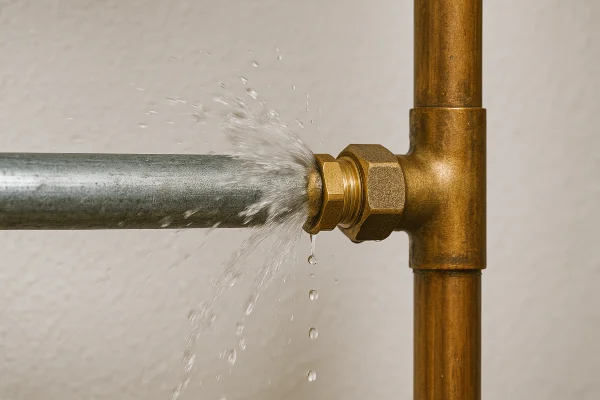
Mini-reel cameras have opened up another tier of work. Older condos with 1.5 inch galvanized drains used to be guesswork. Now a plumber can push a 6 mm head through a bath stack and see corrosion patterns, pitch errors, and old solder globules that catch lint. You can show a resident, frame by frame, why that vanity clogs every month.
Where cameras shine is not just in finding the bad spot but in preventing collateral damage. Instead of opening a ceiling blindly, you map the vertical run, mark joist crossings, and cut a precise square. That keeps restoration costs honest.
Locating with confidence instead of tape measures
A camera is only half the story. Finding that camera head underground or behind concrete requires radio-frequency locating. A transmitter in the sonde emits a specific frequency that a handheld receiver tracks. The older pattern of walk-and-sweep is still valid, but newer locators visualize depth and orientation on a screen, adjust gain automatically, and log a breadcrumb trail.
On a shopping center job, we found a lateral that ran under Click here for more a planter bed, not the parking lot as shown on the original drawing. The locator saved us from saw cutting 20 feet of asphalt and chasing a phantom line. Depth read roughly 4.7 feet, and our pothole confirmed 4.5. Tolerance under 6 inches is typical if you triangulate from two angles and avoid signal interference from power conduits.
Inductive line tracing also pays off during remodels. Tie in a new coffee bar drain, and before you concrete patch, energize the line and trace it to verify it hits the main where intended. A ten minute pass can avert a five figure rework.
Jetters and cutters that think with you
Hydro-jetting used to be brute force. Turn the dial, hold on to the hose, and hope the nozzle does the work. Pressure and flow matter, but matching both to the line and the material is where the gains live. Mid-size jetters now read hose friction and nozzle impedance to predict delivered pressure at the jet, not just at the pump. A 3,000 psi setting at the trailer might be 2,100 psi at 90 feet, and the machine compensates.
The nozzle menu has matured. A root-ranger nozzle with a rear jet pattern cuts and pulls debris back, while a warthog style spins a controlled forward stream to punch through grease. Some nozzles are smart by design, with replaceable orifices and flow restrictors that make a 8 gpm machine behave like it has two personalities. On a mixed-use building, we ran a descaling nozzle on 3 inch cast iron laterals at 2,500 psi, then swapped to a grease cutter for the 4 inch kitchen lines. One pass apiece, and the camera showed bright metal and clean walls.
For mineral scale inside cast iron or steel, chain knockers and picote-style rotary machines do what water alone cannot. The newest models include torque control and RPM feedback, so you can descale without thinning an already weak pipe. That matters on 60 year old lines where the last 10 percent of wall thickness is the difference between a working drain and a collapse.
Trenchless that earns its keep
There’s a time to dig and a time not to. Trenchless methods preserve landscaping, driveways, and slab. The question is which method fits the pipe’s condition.
CIPP liners are resin-impregnated sleeves cured in place, often with UV or steam. Good contractors measure host pipe ovality and account for service reinstatements. Glass-fiber liners cure fast and handle higher temperatures, but a polyester felt liner with epoxy remains forgiving in a house lateral. I have seen CIPP fix a 30 foot run of offset clay joints under a mature oak without touching a root. The key is prep. If you skip descaling or fail to rebuild a missing segment with a spot repair patch, the liner bridges a void and later cracks.
Pipe bursting remains the workhorse when diameter needs to increase or when host pipe is too deformed to accept a liner. A bursting head pulls through, fractures the old pipe, and drags in new HDPE. The machine is smarter now. Tension monitors and data logs confirm you didn’t exceed the safe pull for the pipe and soil conditions. On a 120 foot run beneath a driveway, we used staggered pulls with intermediate pits to keep tension even. The homeowner kept the driveway.
Robot cutters now travel inside the pipe to reinstate branch connections after lining. They locate taps by camera, then mill the liner precisely. Good operators keep a fixture map from the original camera inspection to verify every branch. Miss one, and you hear about it from an upstairs bathroom that suddenly doesn’t drain.
Acoustic leak testing that separates rumor from reality
Water leaks hide in quiet places. Old school methods relied on staining, moisture meters, and guesswork. Modern acoustic correlators listen to pipe walls and use time differences to triangulate the leak. On ductile iron mains, this works exceptionally well. On PVC it can be trickier, since the sound attenuates differently. A seasoned technician compensates by moving sensors closer and lowering band-pass frequencies.
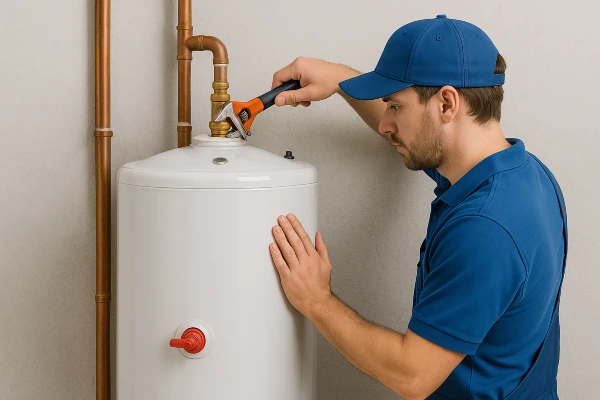
Inside buildings, compact digital listening devices filter out ambient noise and amplify the telltale hiss of pressure loss. A slab leak that once required exploratory jackhammering can now be pinned to a two foot zone. Couple that with thermal imaging on hot water loops and you converge fast. I have found pinhole leaks in copper runs by logging night-time pressure decay and then walking the line with a mic. The difference between a drywall patch and a slab cut can be thousands of dollars. Smart tools decide which path you take.
Smart valves bring prevention into play. Battery-backed leak sensors under sinks and near water heaters talk to a whole-house shutoff valve. The best systems sample flow patterns and learn the family’s habits. A continuous trickle at 2 a.m. after a shower looks like a leak, while 10 minutes of 4 gpm at 7 a.m. is just a teenager. For landlords, a valve that closes on a broken supply line while you sleep is not a luxury.
Pressure, flow, and the math of comfort
Domestic plumbing feels simple until you look closely at transients. Booster pumps, pressure reducing valves, and quick-closing fixtures create oscillations. Data loggers that record at one-second intervals, or faster, show spikes that fatigue copper and brass. In one medical office, the 80 psi municipal supply dropped to 45 through a PRV. Every night at 1 a.m., the janitorial team closed mop sinks abruptly. The shock wave measured 120 psi peak on the downstream side for a fraction of a second. After three years, pinholes started. We installed a water hammer arrester sized to the branch, tuned the PRV spring, and the peak fell under 90. The leaks stopped.
Flow meters with Bluetooth or local data storage give you load curves at fixtures and risers. This nudges design toward reality. A recirculation pump sized off code tables sometimes blasts a loop. With measured flow, you dial the pump to a lower setting, balance the circuit with memory-lock valves, and reclaim energy without letting the last fixture go cold. Many energy rebates hinge on this documentation, and the equipment pays for itself within a season in large buildings.
Smart fixtures and sensors, minus the hype
Touchless faucets and flushometers are now expected in commercial spaces. The intelligence isn’t just in the proximity sensor. It’s in setting the run time so users get enough water to wash hands, while not creating standing water that breeds biofilm. A two second shave on post-flush refill time adds up in high traffic restrooms. Battery life indicators in the app keep maintenance planned rather than reactive.
Smart water heaters and mixing valves help too. A lab building needed precise 120 F at multiple stations. We installed a digital mixing valve with a P&T sensor and a recirculation pump. The system held within 2 F under load. Remote alerts flagged a scale buildup weeks before it impacted users. A simple service call scraped the heat exchanger, not an emergency replacement.
The same restraint applies to residential smart showers. They are pleasant, but the meaningful tech is behind the wall. Pressure-balancing and thermostatic elements prevent scalds during a toilet flush, and systems that purge stagnant recirc lines reduce Legionella risk. An app is fine, but stability and hygiene matter more.
The office is part of the tool bag now
Good reports close jobs. A ten minute video with annotations beats a thousand words of description. Modern inspection suites export MP4s, PDFs with snapshots and distance stamps, and GIS-friendly linework that drops onto a site plan. Clients see exactly what was found and where.
Inventory management has crept into the trade quietly. QR codes on jetter nozzles, camera heads, and even rodding cables let a dispatcher know which van has what. Lose fewer tools, spend fewer hours hunting a 2 inch test ball, keep crews moving.
Dispatch itself benefits from software that assigns jobs based on skill and proximity. If a job is tagged as cast iron descaling at a three story condo, send the crew with the right cutter and dust control, not the one with only a small cable machine. The client sees competency before you unload the truck.
Safety with sensors instead of luck
Plumbing work intersects with hazards you don’t get second chances on. Gas, sewage gases, energized circuits near wet floors. Portable multi-gas detectors, once rare on service trucks, are now standard kit. A sewer tap in a pit can read 80 ppm hydrogen sulfide on a bad day. With a detector, you ventilate and proceed. Without it, you risk a collapse. Confined space protocols get followed when a screen shows oxygen under 19.5 percent, not when someone “feels lightheaded.”
Thermal cameras prevent burns and prevent rework. Before sweating a fitting on a copper line in a wall, map the studs and insulation. After the joint cools, check for convection that signals a slow seep. These cameras also spot a hot neutral in an electrical panel near a new heat pump water heater, which prompts a call to the electrician before a nuisance trip becomes a fire.
Choosing wisely when the catalog dazzles
Not every gadget deserves a spot in the van. The best test is backward from the work you do.
- If 60 percent of your calls are drain related, invest first in a reliable mid-length camera, a sonde locator, and a versatile jetter with a well-chosen nozzle set. Add rotary descaling if you see cast iron frequently. If you handle commercial maintenance, make acoustic leak detection, pressure logging, and digital reporting part of your standard. Offer annual line conditioning with documented before-and-after videos.
A plumber who buys the wrong tool once learns to ask harder questions. How long is the warranty on the camera head, and what is the turnaround on repairs? Are replacement batteries proprietary? Can your jetter accept water from a low-flow source without cavitating? Does the software export in open formats or trap your data? These aren’t afterthoughts. They determine whether your smart purchase remains useful after the first year.
Training is the other half. A camera is only as good as the operator who can read the image and the shadows. A locator in inexperienced hands can be off by yards near rebar or power lines. Good plumbing companies invest time in mock runs. Practice locating in a known path with buried test pipe. Practice jetting in sacrificial lines to feel when a nozzle is dancing rather than cutting. That muscle memory makes field work safer and faster.
The dollar math owners care about
A manager doesn’t need every technical detail. They need a clear reason to approve the invoice. Smart machines give you that. If you hand a video that shows a cracked hub at 31 feet and a locator map pinned on the lawn, the bill for excavation and a proper repair reads as a plan, not a guess. If you show a pressure log that correlates nighttime spikes with pinholes, a PRV replacement stops looking like a sales attempt and more like a solution.
Insurance adjusters prefer documentation. A plumber who can produce inspection files and before-and-after footage expedites claims. For retail centers, that may be the difference between losing a lease and keeping it. For homeowners, it can mean a deductible check rather than an out-of-pocket surprise.
The up-front cost of a CIPP liner or a precision descaling service trips some people. Compare it to replacing floors, cabinets, or lawns, and the math evens out. Add the value of minimized downtime in a restaurant or clinic, and it tips.
Where the edge cases lurk
Smart tech is not a substitute for judgment. Two examples stand out.
First, lining pipes that shouldn’t be lined. If a host pipe has severe deformation or a long, unsupported void, a liner may bridge it briefly and then fail. The camera sees it, but only experience translates that into a stop sign. You either excavate a short section and rebuild, or you choose bursting.
Second, over-pressuring frail lines. A jetter in the wrong hands can turn a small crack into a blowout. You feel resistance, pressure spikes, and then the basement ceiling rains. Set a conservative pressure, start with a pull-back technique, and confirm your progress with the camera. If you see flaking tuberculation and thin wall, switch to rotary descaling with a gentle touch.
Signal interference can fool a locator. Rebar grids, energized conduits, and even chain-link fences distort the field. Cross-check depth by changing the frequency, confirm with a second sweep, and pothole carefully. A few extra minutes prevent a very loud mistake.
The next year or two, not science fiction
A few trends feel ready for prime time. UV-cured liners with shorter cure windows and cleaner job sites. Robots that can patch spot repairs from inside the pipe without excavation. Wider use of cloud-synced inspection records that append to a building’s digital twin, so the plumbing history travels with the address. Predictive maintenance from flow signatures rather than scheduled visits. None of that will replace the craft. It will reward the craft.
For all the talk of smart tools, the human element remains decisive. The plumber who lines up the camera shot so the client understands the problem, who chooses the right nozzle, who hears the difference between air in a line and a leak, who records clean notes and leaves a site tidy, that person turns machines into outcomes. The rest is expensive decoration.
A grounded way to start or upgrade
If you run a small shop, you don’t need to buy everything at once. Start with one pillar and build from there. Choose a camera and locator pair you trust, then add. If you run service for a larger outfit, standardize kits across vans so techs can hop between jobs seamlessly. Set a policy for data: where it lives, how it’s named, how long you keep it. Teach apprentices on test rigs before you send them alone into a crawl space with a new tool.
Smart tech in pipes isn’t a trend to chase. It’s a set of instruments that, used well, make water and waste move the way they should. A plumber equipped for the present can look a client in the eye, describe the system’s state with evidence, and stand behind the fix. That is the revolution, and it looks a lot like competence, measured and recorded.
THE LEANDER PLUMBER - COMPANY 1789 S Bagdad Rd #103, Leander, TX 78641 (737) 530-8021